Institutional interest in alternative CRE sectors has been rising steadily. As shifts in how goods are produced, transported, and serviced reshape the economy, a new group of real estate assets is drawing attention. Sectors tied to food logistics, electrification, media production, and equipment storage are no longer fringe considerations. In 2026, they represent practical ways for investors to align capital with durable economic activity rather than traditional leasing cycles.
Cold storage highlights this shift. Demand for temperature-controlled facilities is increasing as food-distribution networks expand, e-commerce grocery delivery scales, and pharmaceutical requirements grow.
Persistence Market Research estimates that the U.S. cold-storage market will rise from about $39.6 billion in 2025 to more than $91 billion by 2032. Much of the current inventory is outdated. Colliers reports many cold-storage buildings average nearly 40 years in age, creating a gap between modern operational needs and available facilities. That gap is drawing both equity and credit investors toward essential-service real estate with long-term relevance. Yet cold storage also illustrates the need for disciplined underwriting. Market reports show vacancy reached a 20-year high in 2025 as new supply briefly outpaced demand.
Long-term prospects remain strong, but performance hinges on understanding local demand drivers, utility capacity, operator strength, and the complexity of managing technical assets.
Electrification is creating a second emerging category. Fleet operators in logistics, delivery, and municipal transit are moving toward electric vehicles, driving demand for charging yards, high-power sites, and land adjacent to substations.
Real estate once treated as standard industrial land is now evaluated for its electrical capacity and its ability to support large-scale charging. With U.S. EV adoption accelerating—more than 1.2 million new electric vehicles were sold in the first three quarters of 2025—the supporting real estate is becoming its own niche.
Media production is another sector influencing CRE strategy. Growth in streaming, evolving production timelines, and state incentive programs continue to support demand for purpose-built sound stages, studio properties, and creative support facilities. Markets such as Atlanta and several Northeastern metros have become anchors for this activity.
These assets require technical precision—high ceilings, acoustic engineering, reliable power, sizable staging areas—and that specialization often results in longer lease commitments and more stable tenancy once built.
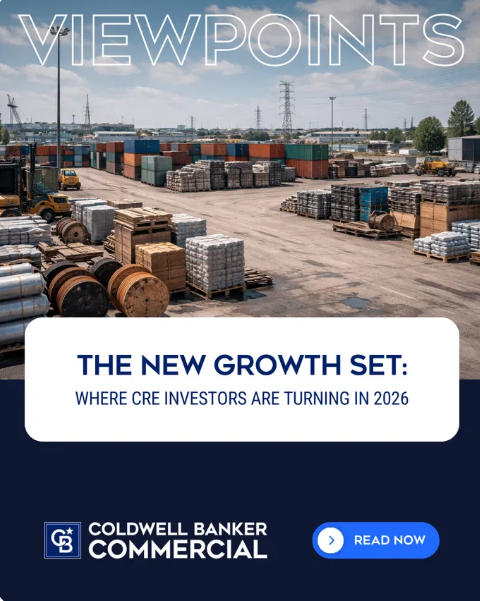
Outdoor storage is also gaining traction. These properties support vehicle fleets, contractor equipment, and logistics staging. Investors are drawn to their low capital requirements, simple operations, and tenants who prioritize access over amenities. Long overlooked, outdoor storage is increasingly recognized as a steady, utilitarian income stream.
Taken together, these sectors reflect a more targeted approach to CRE diversification. Investors are pursuing assets tied to essential economic activity rather than relying solely on traditional property types. The forces behind these alternatives—food logistics, electrification, media production, equipment storage—operate independently from office, retail, or multifamily cycles, offering portfolios greater stability during uneven markets.
Selecting an alternative strategy also requires operator expertise. Cold storage demands specialized systems and compliance capabilities. EV-oriented sites require understanding of power infrastructure and permitting. Production facilities benefit from operators skilled in media workflows. Outdoor storage, though simpler, still requires zoning fluency and diligent tenant management. In every case, strong performance comes from matching capital with operators who understand the nuances of these sectors.
As 2026 unfolds, performance will favor sponsors who anchor decisions in real demand and partner with operators capable of managing these specialized assets. Alternatives offer that path—if approached with precision and selectivity. For investors ready to expand beyond the traditional four-sector model, these assets are well positioned to deliver cycle-resilient returns.