In today’s CRE market, the defining advantage isn’t location or amenities—it’s reliable, affordable power. Developers are realizing that access to steady energy sources now determines value creation. Amid growing grid strain, rapid electrification, and climate volatility, energy resilience has become the new currency of confidence among owners, tenants, and investors.
The Grid Is No Longer a Given
For decades, CRE underwriting assumed that power would always be available, stable, and inexpensive. That assumption is collapsing. Commercial and public buildings consume nearly 75 percent of U.S. electricity and produce 35 percent of emissions, according to the Department of Energy. Rising demand from AI, EV infrastructure, and climate-driven cooling loads is testing local utilities to their limits. The Financial Stability Board recently warned that property markets face systemic risk from energy shocks and weather-related disruptions. That shift is reshaping how investors price both risk and opportunity.
From Cost Line to Competitive Edge
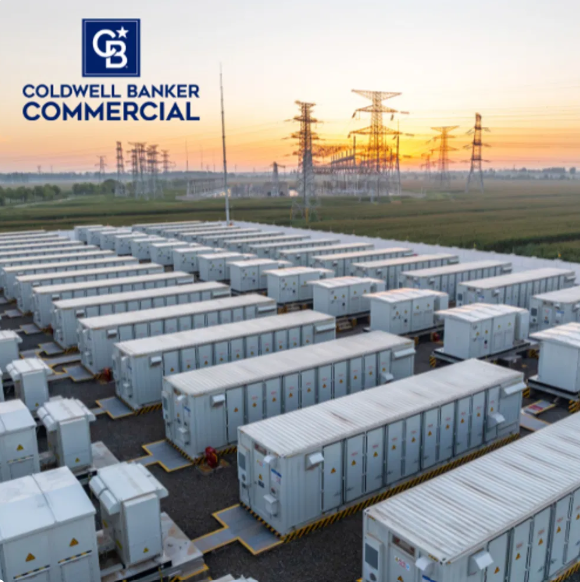
Energy resilience now goes far beyond backup generators. It means on-site renewables, battery storage, microgrids, and smart systems that manage loads dynamically. Developers investing in resilient infrastructure see clear payoffs: reduced downtime, stronger tenant retention, and better insurance terms. NAIOP’s 2025 Resilience Outlook found that assets with solar-plus-storage systems can improve net operating income by 3–5 percent through avoided outage costs and lower premiums.
The Numbers Behind the Shift
Recent data underscores how under-prepared many portfolios remain:
- Only 0.9 percent of U.S. commercial buildings report on-site renewable generation.
- Those that do score 13 points higher in average energy-performance ratings.
The message is simple: energy resilience isn’t just ESG—it’s ROI.
What It Means for Tenants and Investors
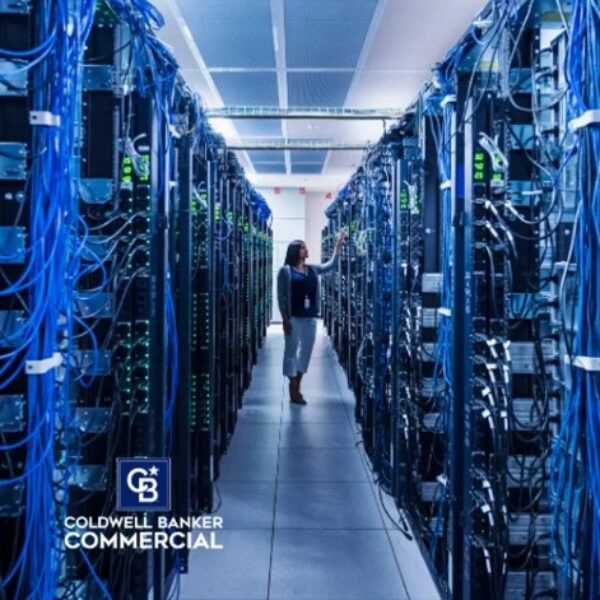
High-demand occupiers—data centers, biotech labs, EV fleets—are reshaping how power is priced into leases. Sites with redundant access or dedicated substations command premium rents. For investors, underwriting models are evolving: energy is no longer a pass-through cost but a risk variable to be stress-tested. Buildings able to demonstrate power stability are already earning more favorable lending terms and tighter cap rates.
The Power-Ready Playbook
Forward-looking owners are embedding resilience in their business plans through five practical steps:
- Baseline data. Measure energy use, grid reliability, and outage frequency on a portfolio-wide basis.
- Prioritize upgrades. Retrofit key assets with solar, storage, or demand-response systems using IRA tax credits.
- Integrate in acquisitions. Treat grid capacity and utility interconnection as core site-selection metrics.
- Disclose and differentiate. Showcase energy security in investor reports and marketing.
- Quantify value. Calculate the “Value of Avoided Outage” as a measurable return metric.
Looking Ahead
As electrification accelerates and AI data centers multiply, power availability will determine which markets—and which assets—grow fastest. Between 2026 and 2030, lenders and regulators are expected to link capital access to climate and energy disclosures. For CRE, resilience is now a baseline requirement.
Developers who view energy as an asset—rather than a cost center—will protect rent rolls, stabilize valuations, and distinguish their portfolios. “Location, resilience, reliability” may soon replace the old mantra of “location, location, location.” Those who secure their power today will own the strongest assets tomorrow.