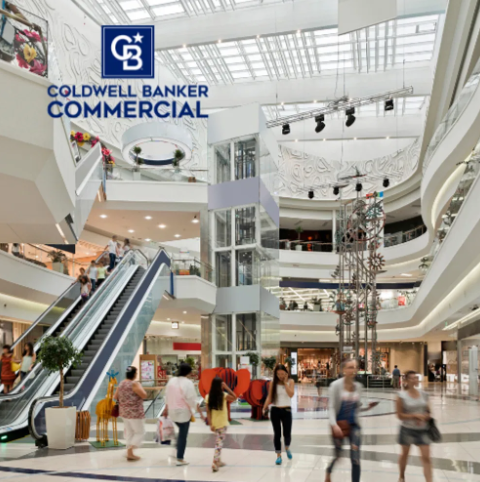
The American mall is not dying—it’s dividing. While roughly 1,200 malls remain across the United States as of 2025, according to Capital One Shopping Research, projections suggest only 900 will still operate by 2028. Yet this headline obscures a more nuanced reality: premier shopping centers with luxury tenants and experiential offerings are flourishing, while lower-tier properties struggle to survive. For mall owners and investors, understanding this bifurcation is critical for making strategic decisions about when to sell, reposition, or convert struggling assets.
A Brutal Retail Landscape
The 2025 retail environment has been unforgiving. According to Coresight Research, more than 8,100 stores closed across the U.S. in 2025, up roughly 12% from 2024, with projections suggesting closures could escalate to 15,000. Major retail bankruptcies have left malls scrambling to fill anchor spaces—Party City shuttered all 700 locations, Joann closed all 800 stores after its second bankruptcy in a year, and Rite Aid ceased operations entirely with all pharmacy locations closed by October, according to media reporting.
Even surviving retailers are retrenching. Macy’s announced plans to close 150 underperforming stores through the end of 2026 as part of its “Bold New Chapter” strategy, with 14 additional locations closing in early 2026 following 66 closures in 2025. The pattern is clear: retailers are consolidating around their strongest locations while abandoning struggling properties.
Performance Tells the Story
Yet amid this carnage, the divide between premier and lower-tier malls has never been starker. According to Placer.ai’s December 2025 Mall Index, indoor malls posted visit gains across all four quarters of 2025, marking a shift from recovery to genuine growth. Open-air shopping centers also performed well, with fourth-quarter visits up 2.0% year-over-year and December traffic rising 1.5%, driven by dining options that attract social holiday visits.
Meanwhile, outlet malls saw annual traffic declines, including a 1.1% drop during the critical holiday season, per the same Placer.ai analysis. The performance gap extends beyond format to quality tier. Class A malls generating over $500 in annual sales per square foot maintain just a 5.6% vacancy rate, while Class C properties with less than $300 per square foot suffer 13.3% vacancy—more than double—according to Capital One Shopping data.
The Winners: Lifestyle Destinations
The malls that continue to thrive share common characteristics, according to Modern Retail’s State of the Mall series. Properties like Houston’s Galleria (attracting over 30 million visitors annually), King of Prussia (22 million annual visitors with 450 stores), and Mall of America (over 40 million visitors) have remained relevant by fashioning themselves as lifestyle destinations rather than mere shopping venues.
USA Today’s 2025 10Best Readers’ Choice Awards recognized these trends, with Florida’s Aventura Mall ranking No. 1 for features like a giant chrome slide tower, museum-worthy art collection, and the first Eataly in Florida. Galleria Dallas (No. 3) was praised for its iconic ice rink and three-story Christmas tree, while King of Prussia (No. 5) earned recognition for luxury retailers like Gucci, Cartier, and Dior.
These successful properties share a consistent reinvention strategy. King of Prussia’s 2016 expansion added 155,000 square feet including a branded dining hub called Savor King of Prussia. The Houston Galleria’s 2017 renovation opened a luxury wing anchored by Saks Fifth Avenue and Nobu restaurant, with 2024 plans including 155,000 square feet of new flooring and LED lighting upgrades. Success requires striking a balance by appealing to different shopper segments while creating destinations where consumers want to spend entire days.
What Separates Winners from Losers
McKinsey’s State of Fashion 2026 report reveals that brands are reinvesting in premium retail locations. Luxury retail square footage in the U.S. rose 65% in the first half of 2025, reflecting efforts to restore growth after previous declines. This aligns with consumer behavior showing that affluent shoppers remain willing to spend on quality and experience.
The Placer.ai report found that over seventy percent of mall visitors also shop at Walmart and Target, while more than half visit Dollar Tree. This cross-shopping pattern underscores a fundamental challenge: malls competing primarily on price and convenience face fierce competition from formats designed specifically for those purposes.
According to Retail Dive’s 2026 trends analysis, malls are entering “a more evolutionary phase, where malls are increasingly being viewed as viable platforms for reinvention rather than assets in managed decline.” Experts predict mixed-use projects will continue in 2026 as mall owners “seek to maximize the highest and best use of the overall site, which often includes non-retail development.”
McKinsey’s research indicates that 51% of global customers say quality is the key driver in creating a high-end brand perception, while 47% cite a strong brand story. Around one-third of consumers are still willing to splurge on fashion when products are well-crafted and they feel valued—providing a lifeline for malls that can deliver premium experiences.
Luxury retail trends support this thesis. According to Mintel research, Gen Z and Millennials are expected to make up 80% of the global luxury market by 2030. Euromonitor found that 55% of high-income respondents prefer spending on experiences rather than things, yet 71% remain price-conscious, underscoring the need for value-driven experiences.
Strategic Timing: When to Act
For property owners evaluating options, timing decisions correctly can mean the difference between maximizing value and watching equity erode.
Consider Selling When: A property lacks the capital, location, or tenant mix to compete on experience. If a mall serves a declining trade area, cannot attract premium retailers, or would require prohibitive investment to reposition, selling now—while premier assets command strong prices—may maximize value before further deterioration. The economic reality is harsh, given that the average vacant mall sells at 43% below its acquisition price, acting before deterioration accelerates is critical.
Reposition If: You have a solid location but outdated tenant mix or insufficient experience offerings. Properties in growing suburban markets with affluent demographics can potentially transform by replacing traditional retail with experiential tenants, upgrading food and beverage offerings, and adding entertainment venues.
The Houston Galleria demonstrates this approach via recent new tenants like Rothy’s sustainable footwear, Skims, and Ring Concierge.
McKinsey notes that brands are investing in elevation strategies—moving upmarket with better product quality and in-store experiences. Position your mall to capture this shift but move quickly before competitors do. As Retail Dive reports, successful centers are asking “how retail anchors a much broader ecosystem of uses” rather than simply replacing retail.
Convert When: The retail math no longer works. Lower-tier malls in strong real estate markets may find their highest and best use elsewhere—mixed-use redevelopment, logistics facilities, medical centers, or residential communities.
Miami’s Lincoln Road exemplifies this conversion transformation. The shopping promenade is undergoing a multi-phase $60.5 million makeover (completion targeted for 2028) that intentionally moves away from the “mall” label. The expansion attracts tenants like Hoka’s first South Florida store and an Alo Yoga flagship with yoga studio, while dining concepts like Florence’s All’Antico Vinaio and Prince Street Pizza position it as a culinary destination.
Indicators suggesting conversion timing is right include persistent vacancy despite aggressive marketing, surrounding land values exceeding retail performance, and local zoning receptive to alternative uses. Remember that closed malls remain empty for nearly four years on average—so it is wise not to wait until a property joins this statistic.
The Bottom Line
The mall industry isn’t dying—it’s stratifying at an accelerating pace. Properties with the right locations, tenant mixes, and experience offerings are capturing growing shares of discretionary spending even as overall mall counts decline and store closures surge. Lower-tier centers face a stark choice: invest heavily to reposition toward premium experiences, find alternative uses, or sell while value remains.
The worst strategy is inaction. With nearly 300 malls projected to close by 2028, Class C properties facing vacancy rates above 13%, and over 8,100 retail store closures in 2025 alone, market conditions won’t wait.
The gap between thriving and struggling properties will only widen as affluent consumers increasingly concentrate their spending at premier destinations. As Modern Retail concluded, the centers that will matter “aren’t asking how to replace retail—they’re asking how retail anchors a much broader ecosystem of uses.” This shift from pure retail to mixed-use experiential destinations represents the future of successful mall properties. Property owners must act decisively—the window for optimal timing is closing as quickly as the malls themselves. The cost of delaying decisions has never been higher.